 Skip to content
FOR SALONS, STYLISTS & HAIR BRANDS
PLUCHARM / PROFESSIONAL BUYING GUIDE
Invisibility is a result you demonstrate, not a claim you put on a product page. Run the same three-part check every time: the parting view at arm’s length, the light-behind view, and the movement view while the client turns. Record the result on the client’s card so the next fitting starts from a known reference instead of a promise.
A client who is told the extensions are invisible will check. A client who is shown a specific view, under a specific light, and then sees the same view on her own head is satisfied with what she actually bought. The difference is not marketing language, it is whether the conversation ends with an observation or an adjective.
This is why tutorial-format content keeps outperforming product photography. A photograph shows the result the brand chose to shoot. A demonstration shows the conditions, and conditions are what clients are really buying: can I wear it up, can I part it there, will my sister notice at dinner.
Do the check in the lighting the client lives in, not under the styling lamp. Overhead salon light flattens seams and will pass a row that daylight exposes. Turn the chair away from the mirror, stand the client near a window, and look at the parting with the light coming from the side rather than from above.
Keep the hair dry for the first pass. Wet hair clumps, which hides a seam temporarily and then reveals it when it dries, and a client who discovers that at home will not trust the second fitting. Dry, brushed and parted is the honest baseline.
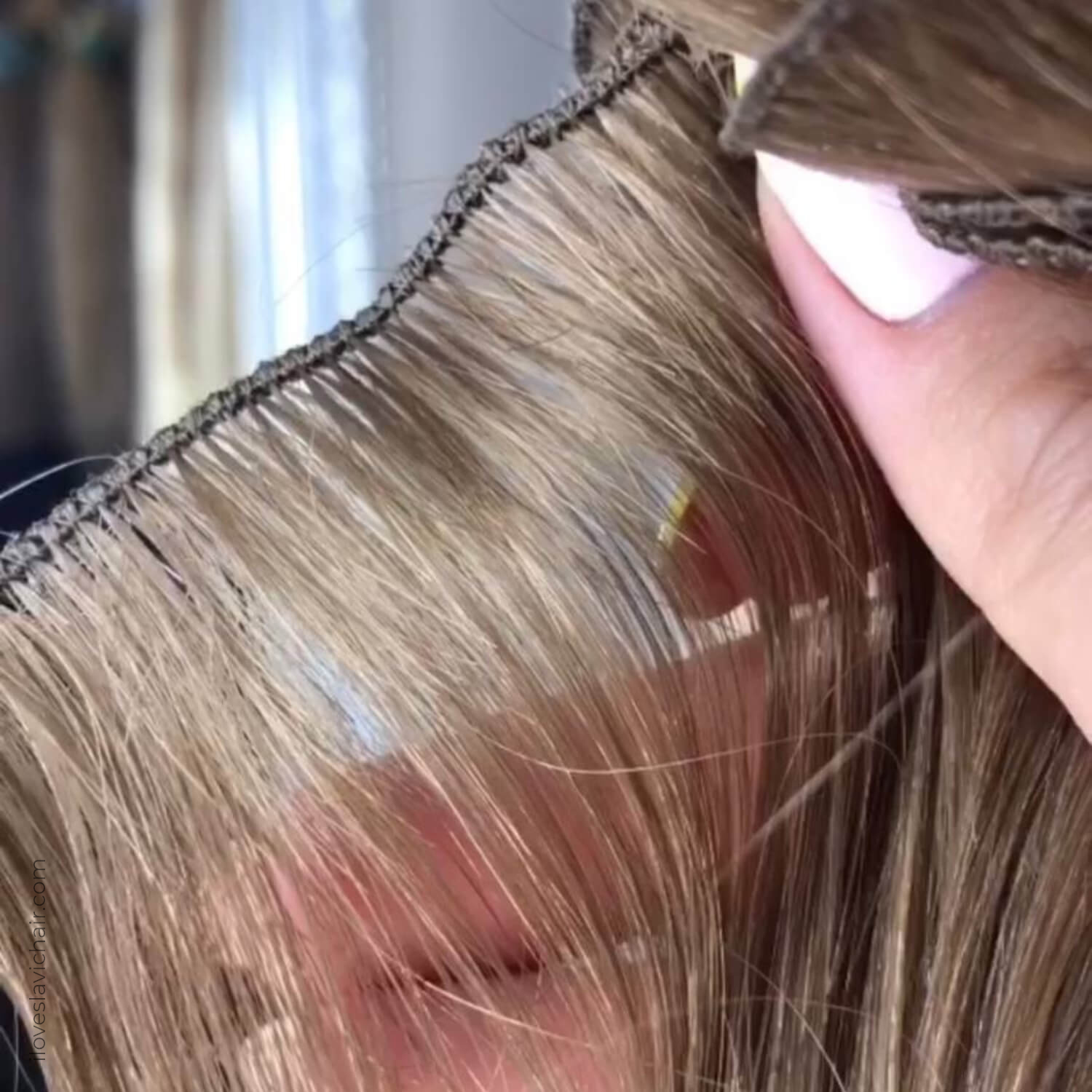
View one, the parting: comb the hair into the parting the client actually wears, stand at arm’s length, and look along the part line. What matters is whether the seam sits below the top layer of natural hair, not whether the knots are neat.
View two, light behind: ask the client to turn so the window is behind her head. Backlighting is unforgiving and it is also how group photographs are taken. A row that disappears in view one and glows in view two needs another 2 cm of cover hair or a different placement.
View three, movement: ask her to turn her head twice, then tie the hair up in the style she wears most. Seams fail in movement, not in stills, because the natural hair slides off the row. If the row is exposed at the end of the movement, adjust it now rather than after the first wash.
If you post the result, shoot the same three views on a phone, at arm’s length, in daylight, with no ring light. A short clip that shows the parting, then the turn, then the updo does more than a lit close-up, and it also protects you: the client has seen the actual performance before she books.
Two framing rules make the clip useful rather than decorative. Keep the camera at the client’s eye level so the parting is not photographed from above, and hold each view for long enough that a viewer can see the seam move with the head. Fast cuts read as concealment, and viewers who work with hair notice.
The same clip becomes a consultation tool. Playing it before the fitting sets expectations, and it gives you a natural way to say where the method does show, which is the next section.
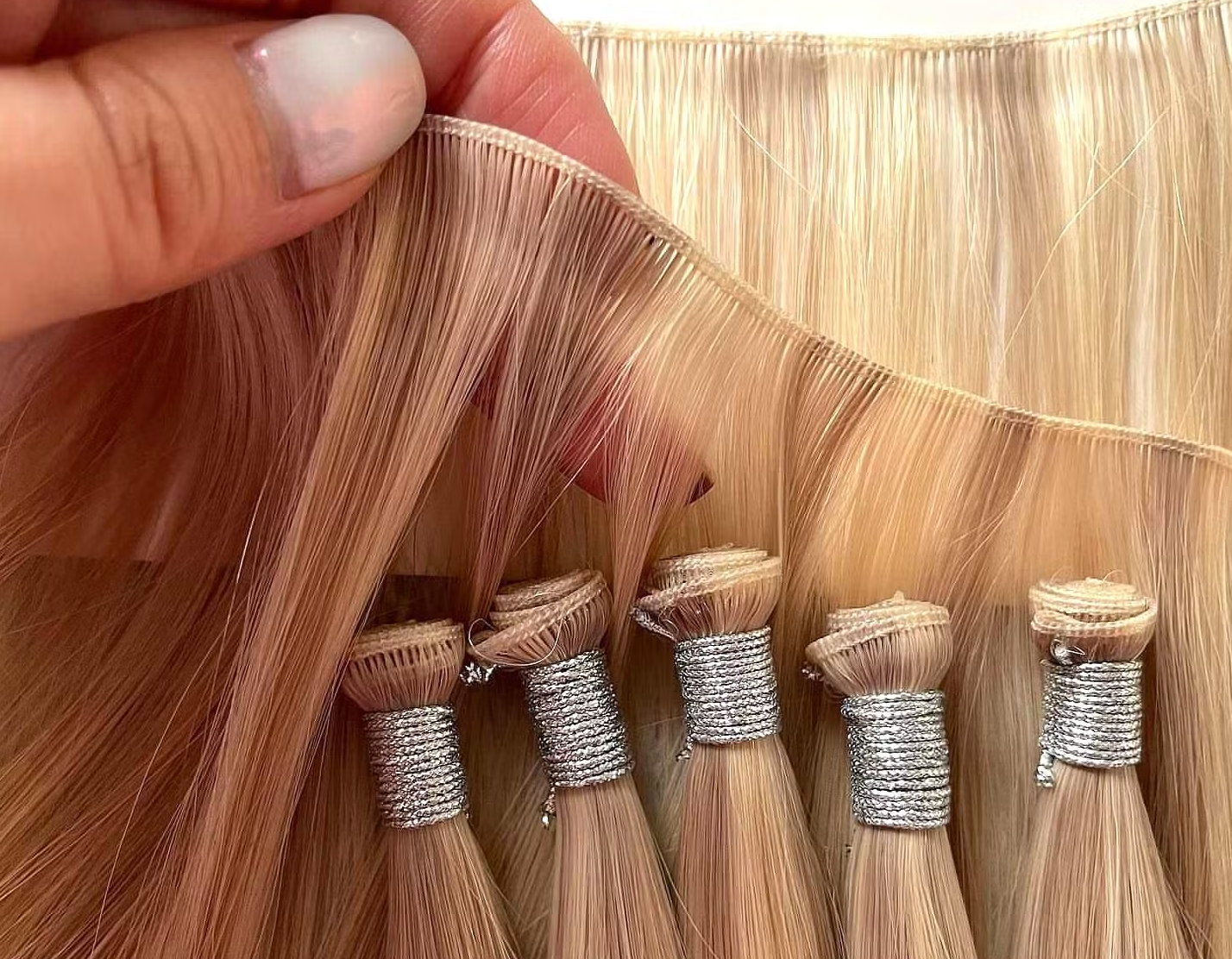
Every method shows somewhere. Tape shows at the edge when the hair is pulled straight back with tension. Wefts show when the hair is parted against the direction of the row. Bonds show as small points under a strong side light. Naming these before the client finds them is what separates a professional from a salesperson.
It also makes the recommendation credible. A client with fine hair and a high parting line-up usually gets a better result from a thin tape base than from a weft, and a client who wears a tight ponytail three days a week is better served by nano tips, which follow the head rather than crossing it. The method follows the hairstyle, not the other way around.
Write down the three views, the light conditions, the row positions and the client’s own verdict, then photograph the approved result. On the next fitting, repeat the same three views and compare. If the seam has become visible, you now know whether it moved because the row dropped, because the natural hair thinned, or because the client changed her parting.
A demonstration you repeat is also the only honest form of before-and-after content. It shows the same head, the same light and the same views, which is what makes it believable to the next client, and it is the kind of sequence that gets saved and shared rather than scrolled past.
Editorial update: 5 November 2026. Demonstration guidance and PLUCHARM ordering information; confirm the specification and commercial terms for your exact order.
For buyers sourcing at volume, this topic sits alongside the practical detail on our wholesale hair extensions page: the thirteen methods we manufacture, trade pricing and minimum order.