 Skip to content
FOR SALONS, STYLISTS & HAIR BRANDS
PLUCHARM / PROFESSIONAL HUMAN HAIR
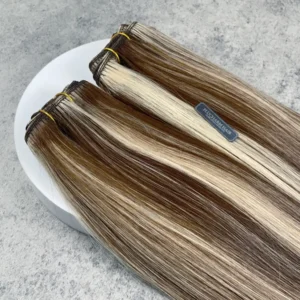
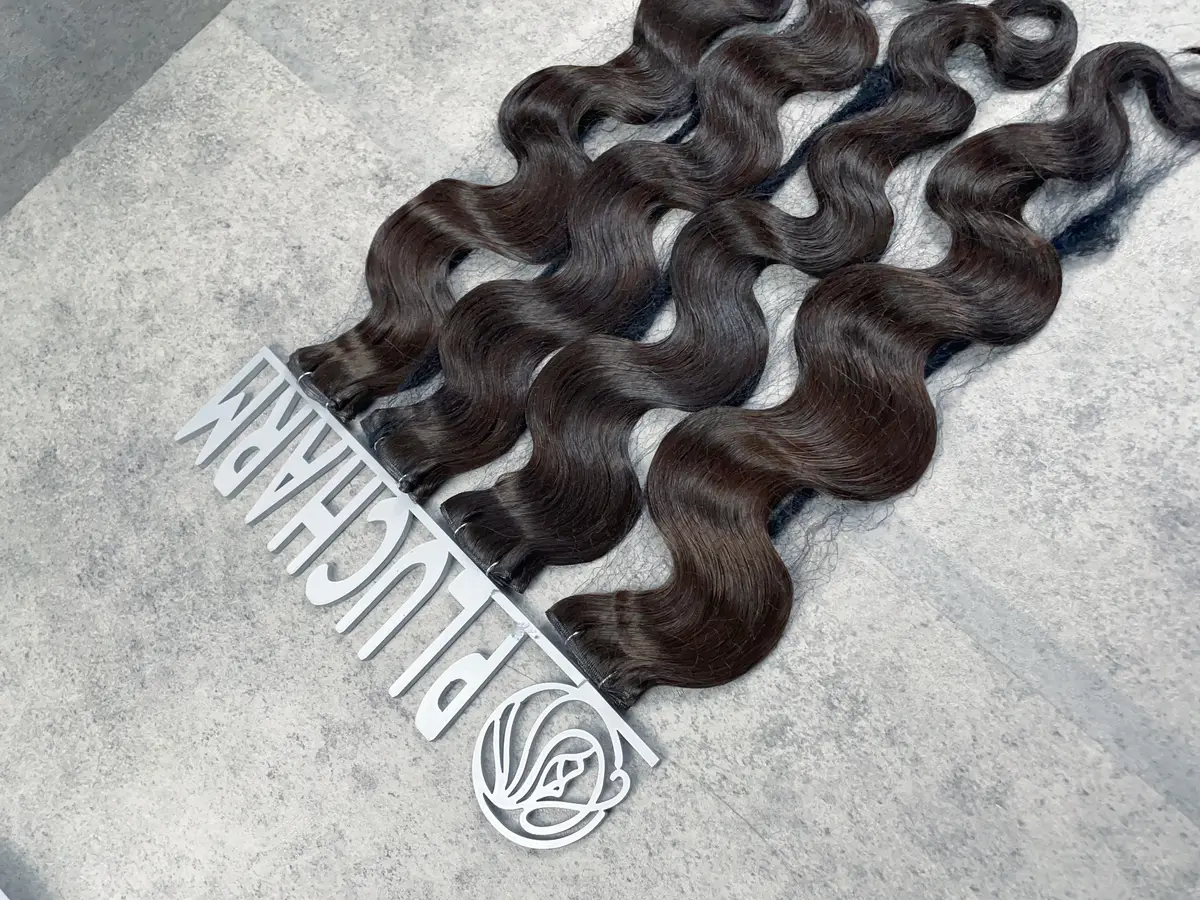
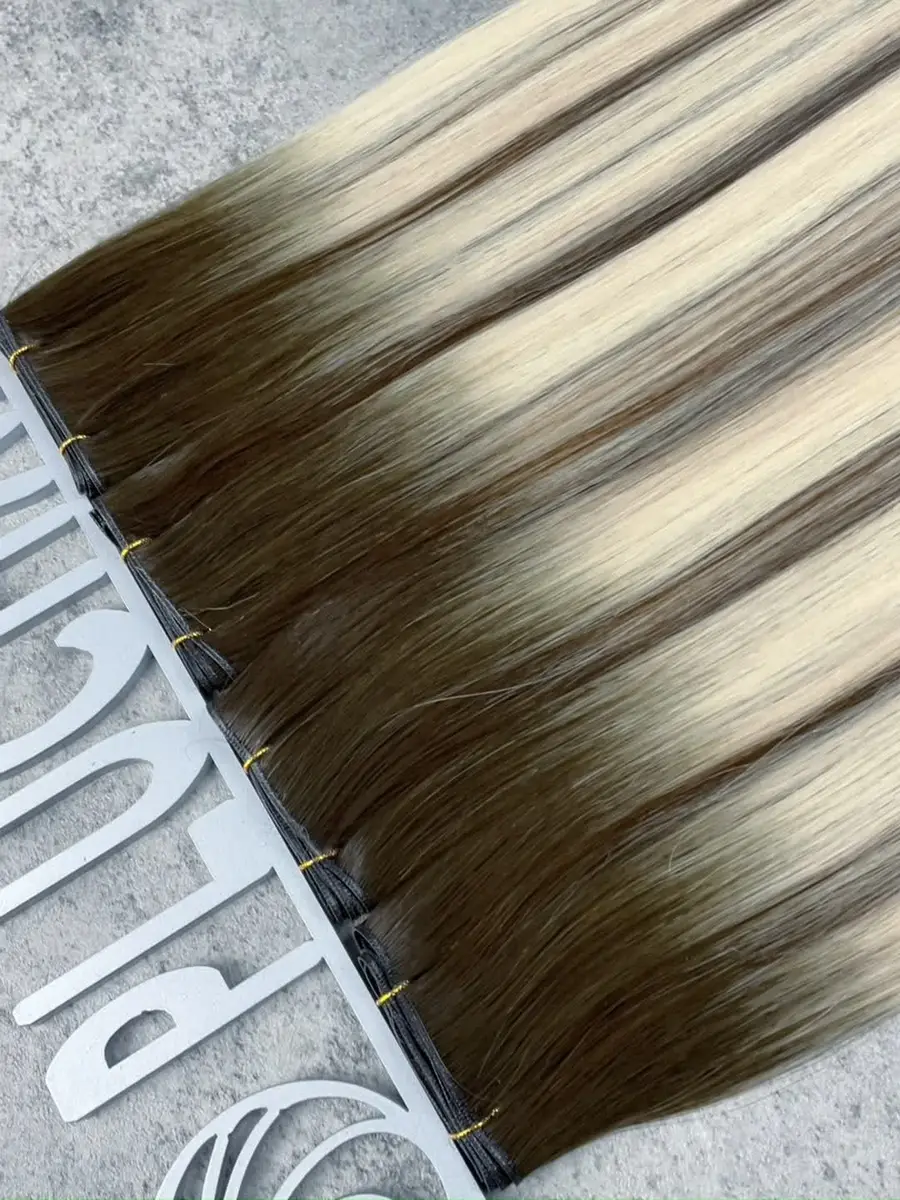
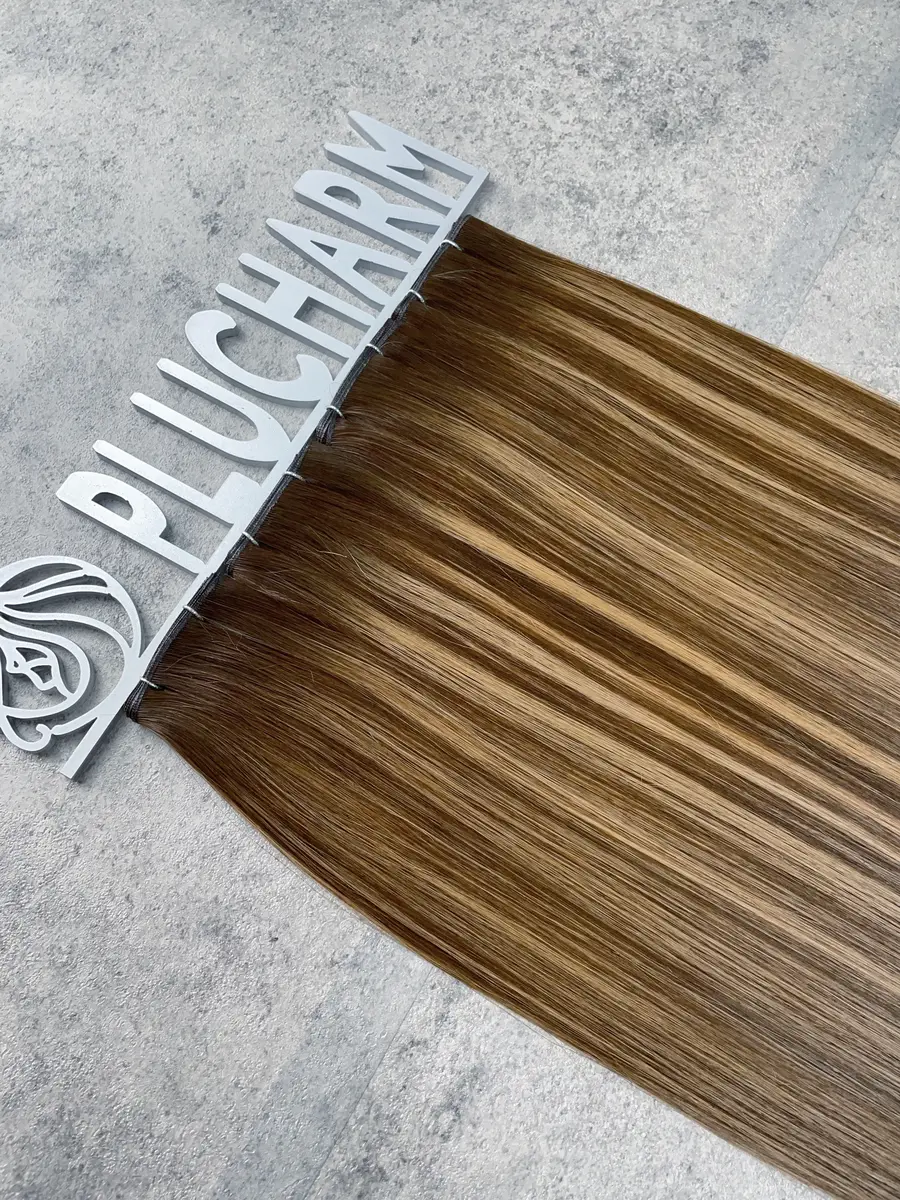
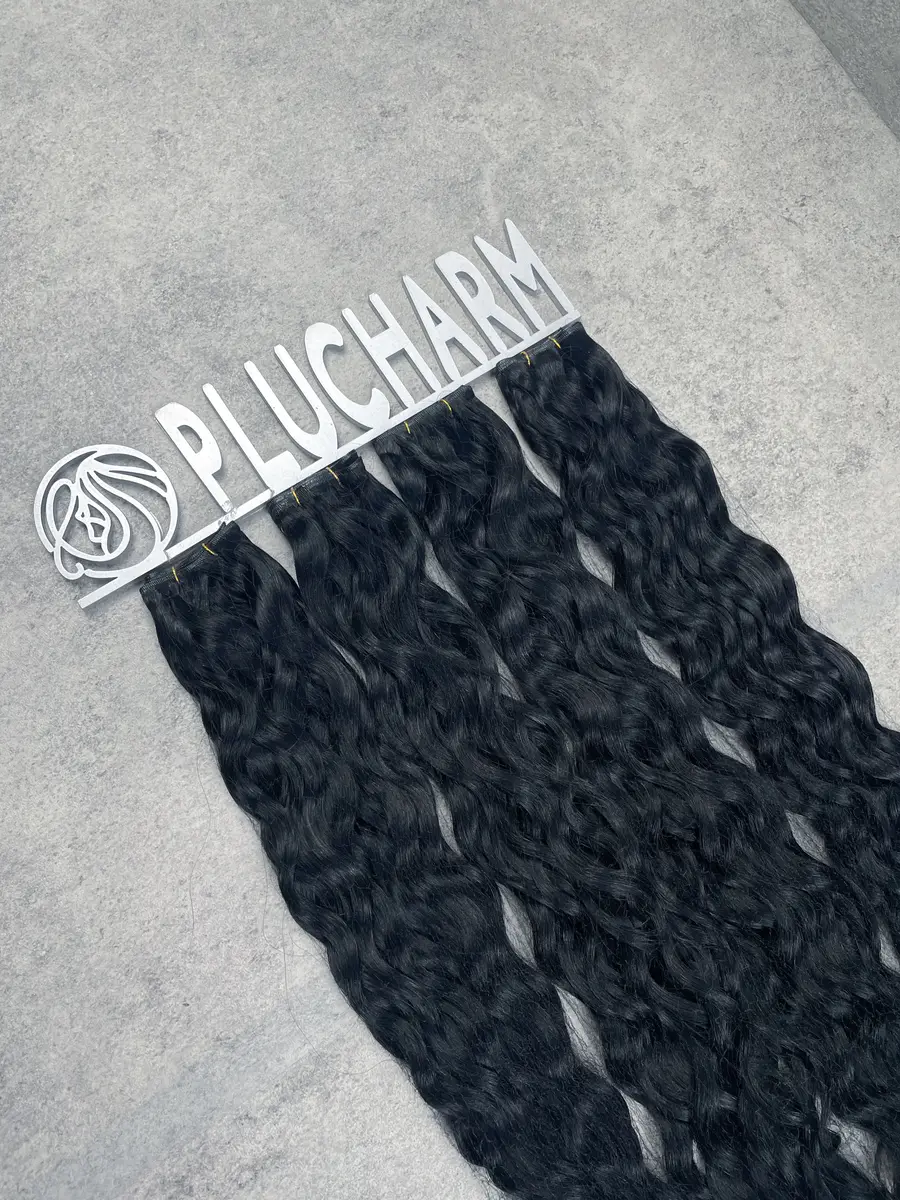
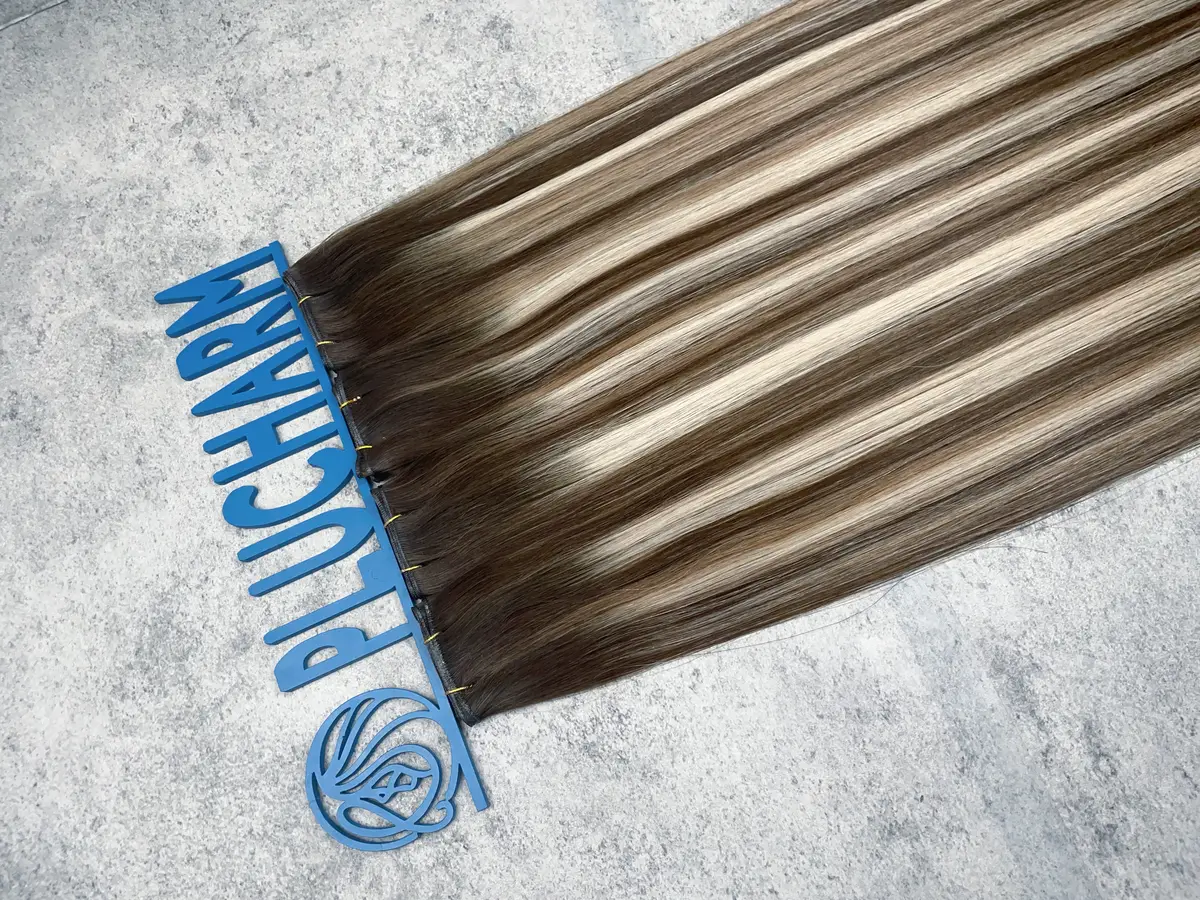
A refined weft option for your professional range. Compare the seam, fullness and finished colour in a physical sample.
$212.00 – $361.00Price range: $212.00 through $361.00
Review your specification and pack quantity before ordering. Items marked quote-on-request are confirmed by our team before production.
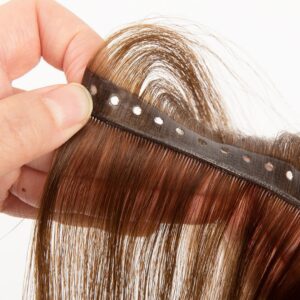
A genius weft is a hand-finished hair weft built on a seam thin enough to lie
flat against the scalp and constructed so that it can be cut anywhere along
its length without the hair coming out. It sits between two older formats:
it has the low profile and natural drape of a hand-tied weft, but it does not
behave like one when a stylist needs to size it.
That single property — a seam you can cut — is what changed how salons use
wefts. On a hand-tied weft, cutting the seam destroys it: the knots release and the
row sheds from the cut point. On a genius weft, a row can be trimmed to the exact
circumference of one head, which means a stylist is no longer paying for length
that goes unused.
PLUCHARM manufactures genius wefts in our own workshop in Juancheng, Heze,
Shandong, on cuticle-aligned 12A hair, and supplies them wholesale to salons, hair
brands and distributors.
This is the part that matters to an account, and it is not really about
aesthetics.
An installation needs a certain length of weft around the head. A machine weft
cannot be cut, so it is ordered per row — and on a shorter installation, the
surplus is offcut material you paid for and cannot use. Over a week of installs,
that waste is a real line in your cost per client.
With a cut-anywhere seam:
A traditional hand-tied or machine weft carries return hair — the short
folded hairs at the seam that give the weft its body. They also sit against the
scalp, and on clients with sensitive or fine hair they are the usual cause of the
itching and matting that get extensions blamed.
A genius weft is built without them. The seam is flat rather than padded, so
there is no ridge and nothing short and rough pressing on the scalp at the root.
Practically, that is why it suits fine hair and clients who have previously found
wefts uncomfortable — and it is why the method retains clients rather than seasons.
| Genius weft | Hand-tied weft | Machine weft | |
|---|---|---|---|
| Seam profile | Thin and flat | Thin, slightly padded | Thicker, denser |
| Return hair | None | Present at the seam | Present |
| Can it be cut? | Yes, anywhere along the seam | No — cutting releases the knots | No |
| Volume per row | Moderate | Moderate | Highest |
| Best for | Fine to medium hair; precision layering | Natural drape; concealed seam | Maximum volume at lowest cost per gram |
| Ordered as | A pack, split to fit | A pack, sized to fit | Per row |
There is no single winner here, and a range that only carries one weft forces
stylists to compromise. An account carrying a genius weft alongside a machine weft
can put volume on a client who needs thickness and precision on a client with fine
hair — from the same colour standard. See the rest of the range on the
wholesale hair extensions overview.
The weft is the product; the installation method is the stylist’s choice. A
genius weft works with the methods weft clients already use:
A refit reuses the hair. That is the commercial argument for a weft over a
bonded method: the same bundle serves the client across multiple appointments, so
the cost per wear falls each time it is refitted.
Other weights, custom lengths and custom colour are available on a production
run. Browse the current shades and prices on the
genius weft listing, or see the full
shop for the other twelve methods.
All thirteen methods PLUCHARM manufactures are matched to a single physical
shade ring. That is a commercial decision rather than a cosmetic one: an account
can carry tape-in volume, a genius weft row and a strand method, and the colours
will agree under salon lighting.
When hair is bought from several suppliers, the mismatch shows up first on light
colours and under directional light — the classic case being a weft whose root
reads cooler or warmer than the tape beside it. Matching to one ring removes that
failure mode, and if you already sell extensions we match to your ring
rather than ours so your shade numbering stays intact.
The format is easy to describe and harder to make well, so these are worth
testing on a sample rather than trusting on a specification sheet:
Yes — that is the defining property of the format. The seam is built so the hair
does not release when the weft is cut along its length, which is what allows a row
to be trimmed to one head. Test it on a sample: cut a row and comb it firmly.
No. Both are thin and drape naturally, but a hand-tied weft cannot be cut along
the seam without releasing the knots. That difference is what makes a genius weft
usable as a split pack.
No. There is no return hair, which is why it does not ridge or itch at the
scalp the way a traditional weft can. That is the main reason it suits clients with
fine or sensitive scalps.
It depends on the client’s natural density and the result you want. The limit is
set by the natural hair carrying the row, not by the weft — more rows than the
natural hair can support is where tension and slippage come from.
The hair is refittable, so the useful question is how many refits a pack serves
rather than a single wear period. Wear interval and refit timing follow the
installation method, which is the stylist’s decision.
It is particularly suited to fine, fragile and colour-treated hair, and to
clients who have found wefts uncomfortable because of return hair. It suits medium
and coarse hair too, where the installation simply needs less precision.
18 in, 20 in, 22 in and 24 in as standard, in 26 shades matched to one physical
ring. Custom lengths and custom colour are available on a production run.
In-stock shades can be ordered in small quantities so you can verify the cut and
the grade first. Custom colour and private label carry a higher minimum, because
those goods cannot be sold to another account.
Both. A single salon and a national distributor are quoted on the same price
logic — the difference is volume, not channel.
Yes. The method, lengths, shades and packaging are yours to specify, and we
match colour to your existing ring so your shade numbering survives the change of
manufacturer.
If you already know the specification you want, tell us the lengths, shades and
quantity and we will quote it. If you are deciding between weft formats, order a
sample and cut the seam yourself — it is the fastest way to see what the format
does, and it costs less than one bad row.
Contact us, or see
private label hair extensions if you want this weft made under
your own brand.
Buyers search for this product under several names, and they are the same thing:
genius weft hair extensions, genius wefts,
genius weft extensions, and plain genius weft. The
format is one product — a hand-made weft with a flat, fine seam — sold in 100 g sets
across 26 shade references and four lengths.
Where the naming does matter is butterfly genius weft, which is a
genuinely different construction rather than a synonym: it is two-sided and can be
folded, so one row covers more width. If you are comparing quotes for “genius
wefts”, check which of the two constructions is being priced before comparing the
number.
Trade buyers usually arrive looking for wholesale genius weft hair extensions and
find the format is quoted per 100 g set, not per weft, because a weft has no fixed
weight. Our sets run from US$176 to US$272 depending on length and
colour, before freight of US$35 for the first 300 g and US$20 for each further
300 g. Volume tiers, minimums and lead times are quoted per specification on the
wholesale overview.
Because genius weft is hand-made rather than machine-woven, it carries a longer
production band than a machine weft — 7 to 12 days against 5 to 10 — and that
difference is worth building into a launch plan. The comparison across formats is in
weft hair extensions compared.
| Weight | 0.16 kg |
|---|---|
| Length | 18, 20, 22, 24 |
| Colour | C01 Jet Black, C02 Natural Black, C03 Espresso Brown, C04 Chocolate Brown, C05 Cocoa Brown, C06 Chestnut Brown, C07 Mocha Brown, C08 Caramel Brown, C09 Honey Blonde, C10 Beige Blonde, C11 Platinum Blonde, C12 ICE Blonde, C13 Highlight Chocolate to Mocha Brown, C14 Highlight Honey to Platinum Blonde, C15 Ombre Espresso to Mocha Brown, C16 Ombre Espresso to Beige Blonde, C17 Ombre Mocha to Honey Blonde, C18 Ombre Mocha to Beige Blonde, C19 Ombre Mocha to Platinum Blonde, C20 Balayage Espresso to Chocolate Brown, C21 Balayage Espresso to Mocha Brown, C22 Balayage Espresso to Caramel Brown, C23 Balayage Espresso to Mocha Bronde, C24 Balayage Espresso to Caramel Bronde, C25 Balayage Mocha to Beige Platinum, C26 Balayage Mocha to Caramel Blonde |
| Grade | 12A |
Compare a physical colour ring and hair sample in consistent light. Screens can display shades differently. Explore the colour system.
Share your method, grade, colour, finished length and pack requirements. For samples, we recommend 100g for assessment; standard pricing and shipping apply. Discuss your selection.
Your account holds your orders and saved addresses. Use order lookup with your order number and billing email. Carrier tracking becomes available when shipment details are added to your order.
XO is quoted per order — send the colour, length, grade and pack size you need and we will confirm the specification and price before anything is produced.