Approve the sample and specification. Agree any additional inspection criteria or reporting requirement in advance.
Before dispatch
Ask to review the relevant attachment detail, colour, length, finished weight and pack count against the order.
On arrival
Keep product identification and packaging. Report any difference with the order reference, affected quantity and clear photos.
THE DETAIL IN VIEW
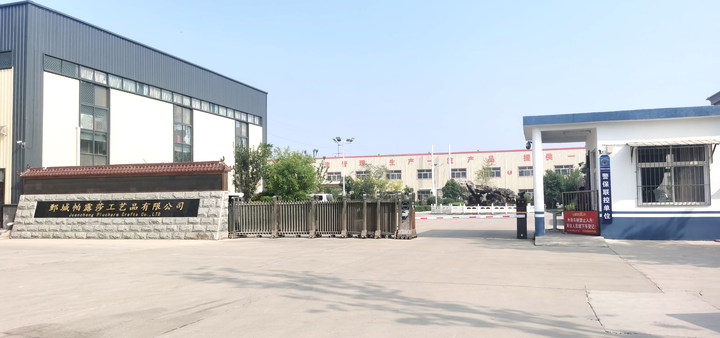
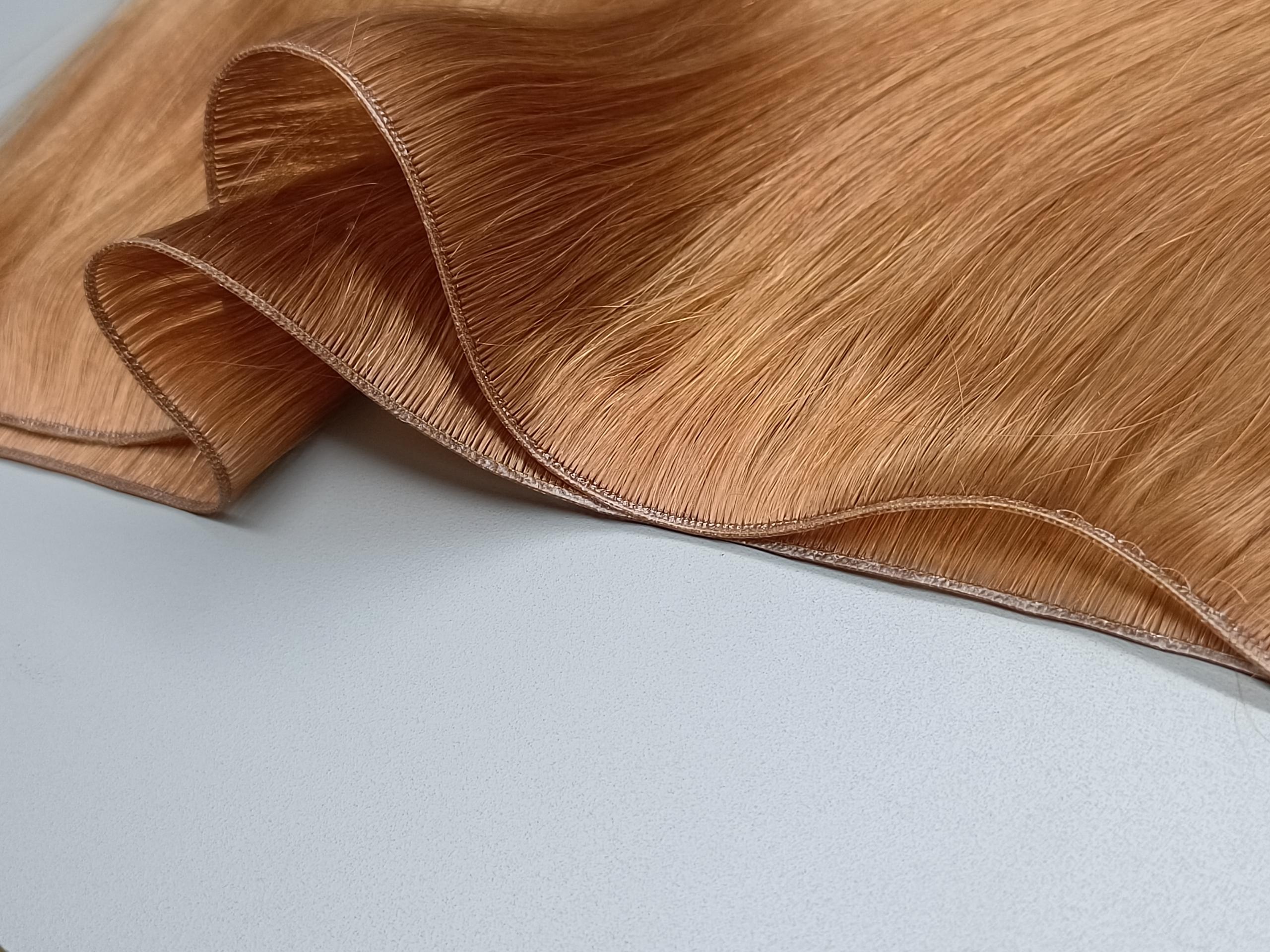
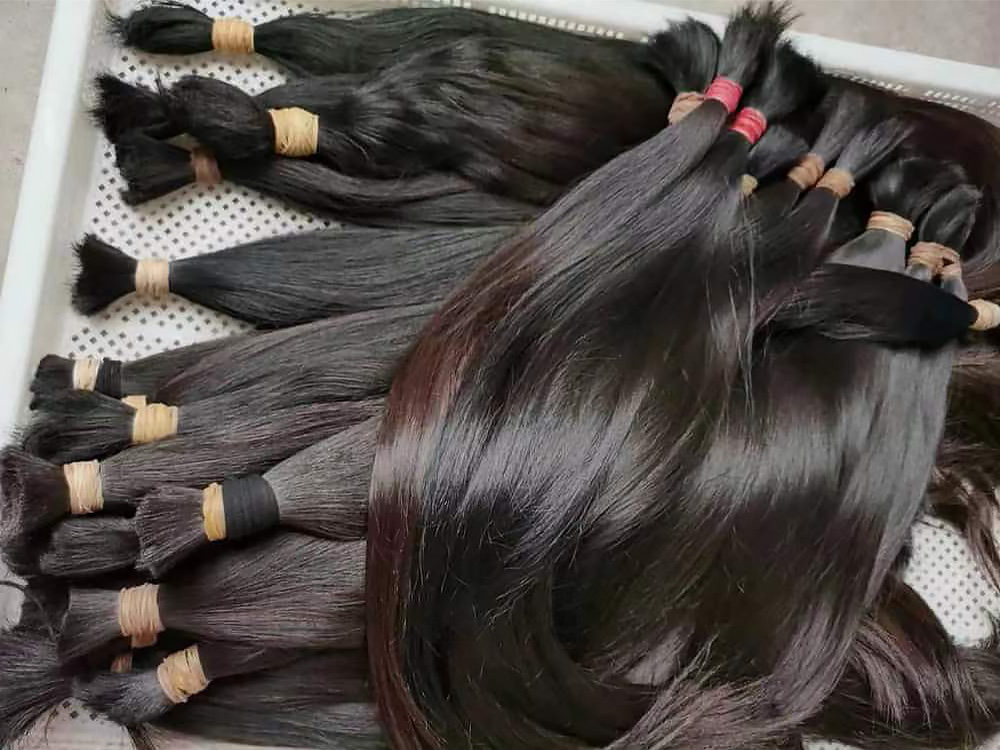
Existing product and production images. Request current material for the exact product and order you are reviewing.
BEFORE YOU ORDER
A clear start.
Can I review current factory or product material?
Tell us the method and process you want to understand. Ask the team for current, relevant photos or video and clarification of what each view shows.
Can I arrange extra inspection or testing?
Share the test method, acceptance criteria and reporting requirements before ordering. Feasibility, cost and timing are agreed separately.
What happens if something differs on arrival?
Send the order reference, affected quantity and evidence of the difference. Keep the hair and packaging available for assessment. Any remedy is confirmed after review.
YOUR NEXT STEP
Tell us what you need to see.
Share the product and the quality questions that matter to your business.
Inspection is only meaningful if it sits at a fixed point in the flow and has a
named owner. Ours runs in three stages, and the middle one is the one that catches
the defects buyers actually complain about.
Incoming raw hair. Cuticle direction and alignment are checked
on the raw bundle. Hair that fails here never enters production — it is the stage
that prevents a whole lot from being wrong rather than spotting it at the end.
Mid-production, after construction. Seam height, stitch
integrity and shedding are checked on the finished piece before it is matched. This
is where a weak seam or an uneven row is caught, because both are invisible in a
skein of raw hair.
Pre-packing. Shade against the master reference, weight per set,
and the finished appearance against the approved sample. Only after this does a lot
get packed.
Holding a tolerance rather than a promise
Every set is sold by weight, so a weight tolerance is a commercial term. We state
it on the quotation rather than describing quality in adjectives, and the same goes
for shade: a lot is matched against a master shade reference, not against whatever
ran last, because matching to the previous run lets a drift accumulate across a
season.
Why we ask you to approve a sample
Seam height, drape and shade cannot be judged from a photograph, and a
specification that has only ever been read cannot be produced consistently. The
approved sample becomes the acceptance reference for every later run, and it is the
document that settles a disagreement about consistency — because it is physical
rather than verbal. How to run that evaluation is set out on our
sample
evaluation page, and the buyer-side checklist for testing whether any factory
holds quality across batches is in
hair extension quality consistency.
What we can supply with a shipment
On request: the written specification for the order, the shade reference used,
and any test reports the lot carries. We do not claim certifications we do not hold,
and we would rather tell you which document is missing than describe quality in
words that cannot be checked. If a certificate is a requirement for your market, say
so at the quotation stage and it becomes part of the specification rather than an
assumption.
 Skip to content