 Skip to content
FOR SALONS, STYLISTS & HAIR BRANDS
PLUCHARM / PROFESSIONAL BUYING GUIDE
Most extension failures are visible after the first proper wash, not on the day of fitting, because water removes the finish that hides a weak seam and reveals whether the hair was aligned. Judge a supplier on what the product does in wash two, and judge a review video on whether it shows that wash.
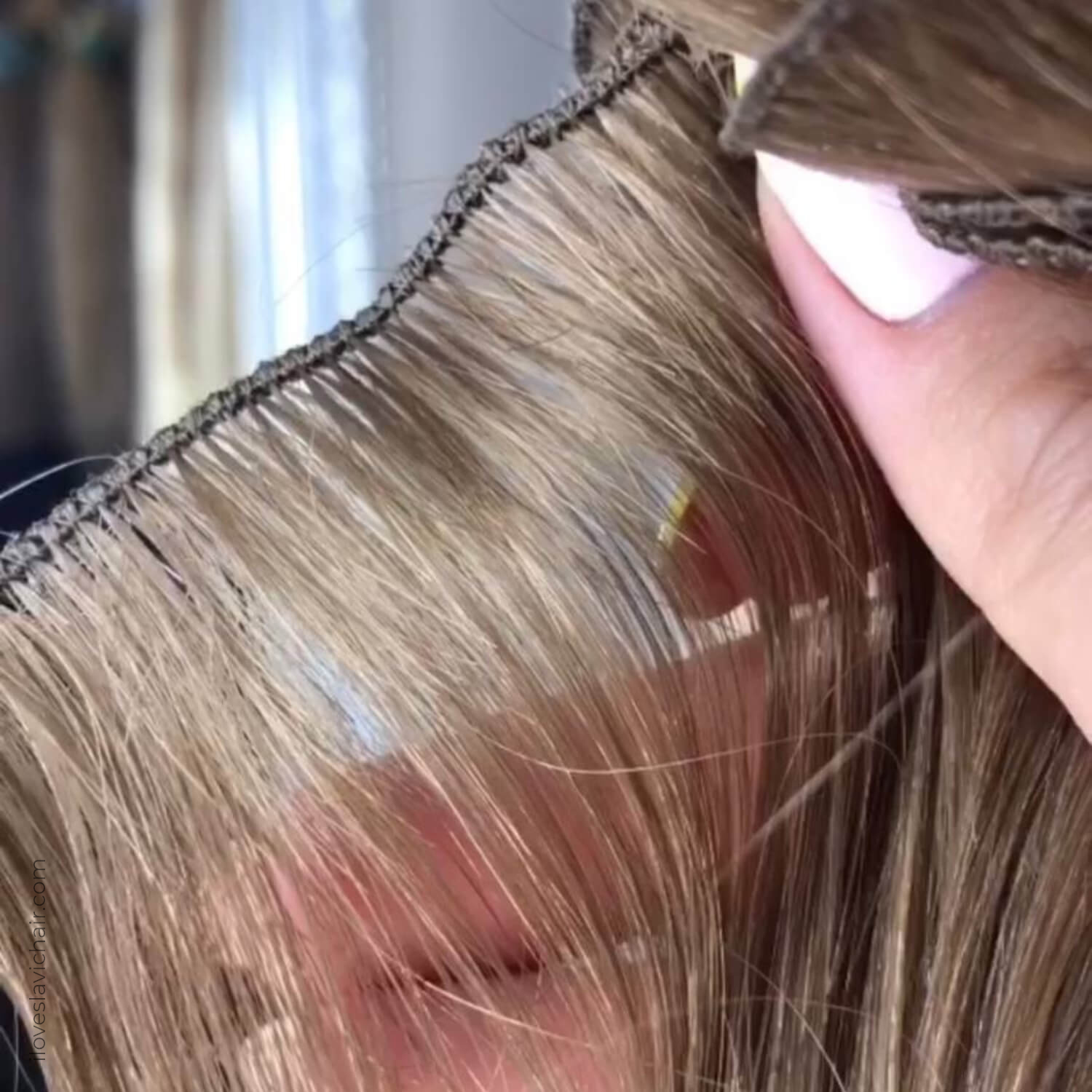
New hair arrives with a surface finish from processing and handling that makes it look smooth and makes a seam look tighter than it is. Shampoo strips that finish. What is left is the actual construction: whether the cuticle runs in one direction, whether the seam holds under weight, and whether the colour is fixed or still releasing.
A supplier who is confident about the product will talk about wash two rather than about the unboxing. That is the most useful filter available to a buyer, and it costs nothing to apply.
Shedding at the seam after one wash usually means the weft edge was cut and left unsealed, or the stitch density is too low for the row weight. It is a construction defect, not wear.
Matting at the nape usually means the hair is not aligned: some strands have the cuticle running the opposite way, so they catch on their neighbours. No amount of conditioner fixes direction. This is the failure that most often gets blamed on the client’s routine and is actually a sourcing decision.
Colour release in the first two washes means the dye was not properly fixed, which shows as a tinted rinse water and a batch that fades unevenly. Dryness that appears within a week, with ends that feel like straw while the roots feel normal, usually points to over-processed hair rather than to aftercare.
Each mode has a different cause and a different commercial answer, which is why a complaint that only says the extensions are bad cannot be resolved fairly for either side.
A video with millions of views is evidence of reach, not evidence of a defect. Watch it for three things: whether the hair is wet or dry, whether the lighting is direct, and whether the creator shows the same section before and after washing. A clip that jumps from unboxing to complaint without the wash in between documents a feeling, not a failure.
That is not a reason to dismiss complaints. It is a reason to ask what specifically failed. A creator who can say the seam shed eight strands in the first wash, or that the water ran brown, has given you a testable claim. Reach amplifies whatever the underlying claim is, including a correct one.
For brands, the lesson is uncomfortable but simple: if the product cannot survive a wash filmed on a phone, no amount of content production will fix the reputation.
Paying creators in product rather than cash is now normal, and it is not the problem. The problem is content that presents a gifted set as a purchase. Viewers calibrate trust on that distinction, and once they feel misled about the transaction they stop believing the technical claims too.
The workable norm is disclosure in the first line, plus one verifiable detail that a buyer could check on the product itself, such as the finished weight per row or the seam height. A disclosed gift with a specific measurement is more persuasive than an undisclosed purchase with adjectives, because the viewer can act on it.
Ask for four things and see which ones arrive without a follow-up. Batch reference and production date, so a complaint can be traced to a run. Finished weight per row measured after the seam, not before. A wash test result on the actual batch, including whether the water ran clear. And a written remedy that applies before the goods are used, not only after a dispute.
A supplier who can produce all four is describing a process. A supplier who answers with reassurance is describing a hope. The difference shows up in the second order, and it is the reason buyers who audit once tend to keep ordering from the same factory.
When something does fail, the sequence matters. Photograph the section dry, in daylight, before washing again. Keep the rinse water in a white bowl if colour is the issue. Record the batch reference and the fit date. Then send the images with the specific failure mode named, rather than a general complaint.
A supplier working to a real QC process can act on that. They can compare the images against the batch record, check whether the failure matches a known construction issue, and decide on replacement or credit without a negotiation about impressions. Where the failure is direction alignment or seam shedding, the factory can also tell you whether it is a one-off or a run-level problem, which is the information a salon actually needs before rebooking the client.
Failures are the most useful content in this industry, for buyers and for factories. The only version that helps anyone is the one that names what broke and how it was tested.
Editorial update: 8 November 2026. Failure modes described here reflect PLUCHARM production and QC practice; confirm the specification and commercial terms for your exact order.
For buyers sourcing at volume, this topic sits alongside the practical detail on our wholesale hair extensions page: the thirteen methods we manufacture, trade pricing and minimum order.